Primary School Playground Consultancy • Outdoor Learning • Staff CPD
School grounds that work harder for every child
We help schools rethink the space they already have — keeping the durable playground, pitches and equipment that work, then adding purposeful areas for active play, quieter play, socialising and outdoor learning. Practical to supervise, realistic to maintain, and designed around your children.
40+years' combined experience in outdoor education & schools
EYFS–KS4plus SEND settings — CPD for every phase
What we do
Make more of the space you already have
We do not start by replacing a playground or filling it with planting. We start with what already works, how your children use the site, how staff supervise it and what your maintenance team can realistically sustain. Then we identify the changes that will make the biggest difference.
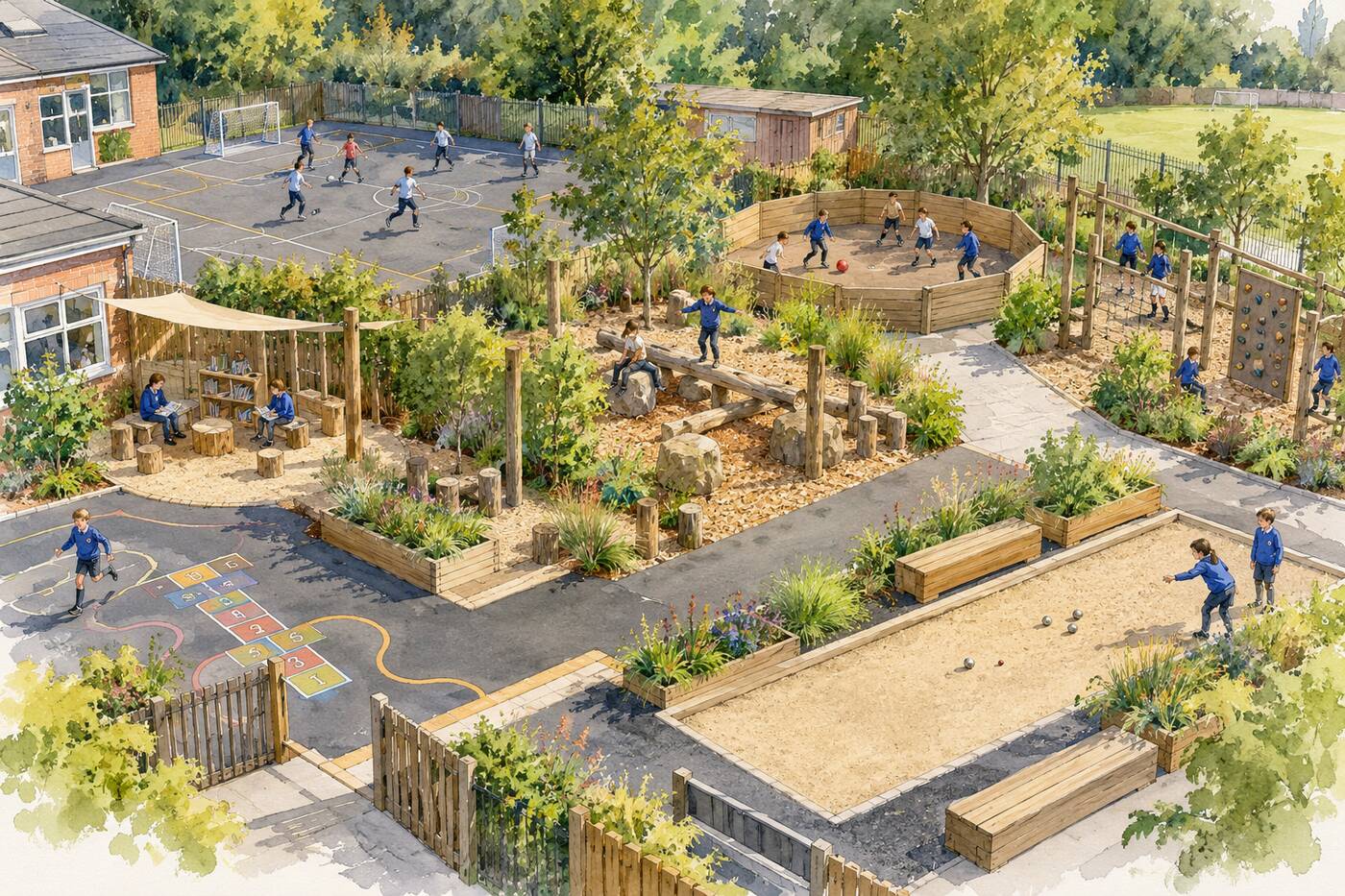
A good school playground does not need to choose between traditional hard-surface play and a fully naturalised landscape. We help schools keep the durable areas that already work for running, ball games and whole-school use, then create additional zones for climbing, balancing, reading, socialising and smaller-group play. Boundaries can be simple and robust — changes in surfacing, benches, planters, low fencing or carefully selected planting — so the space feels varied without becoming a garden that staff have to maintain.
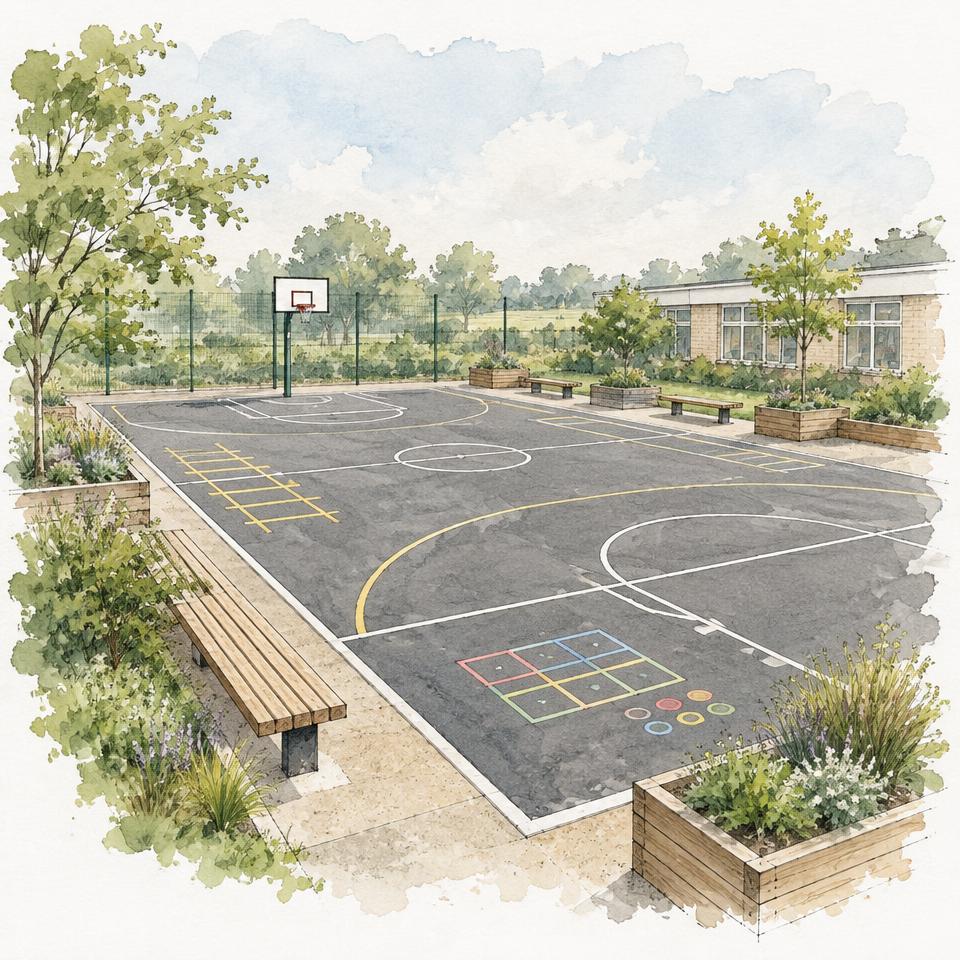
Concept illustration: a traditional playground adapted to offer a wider range of play, movement, social and quieter experiences.
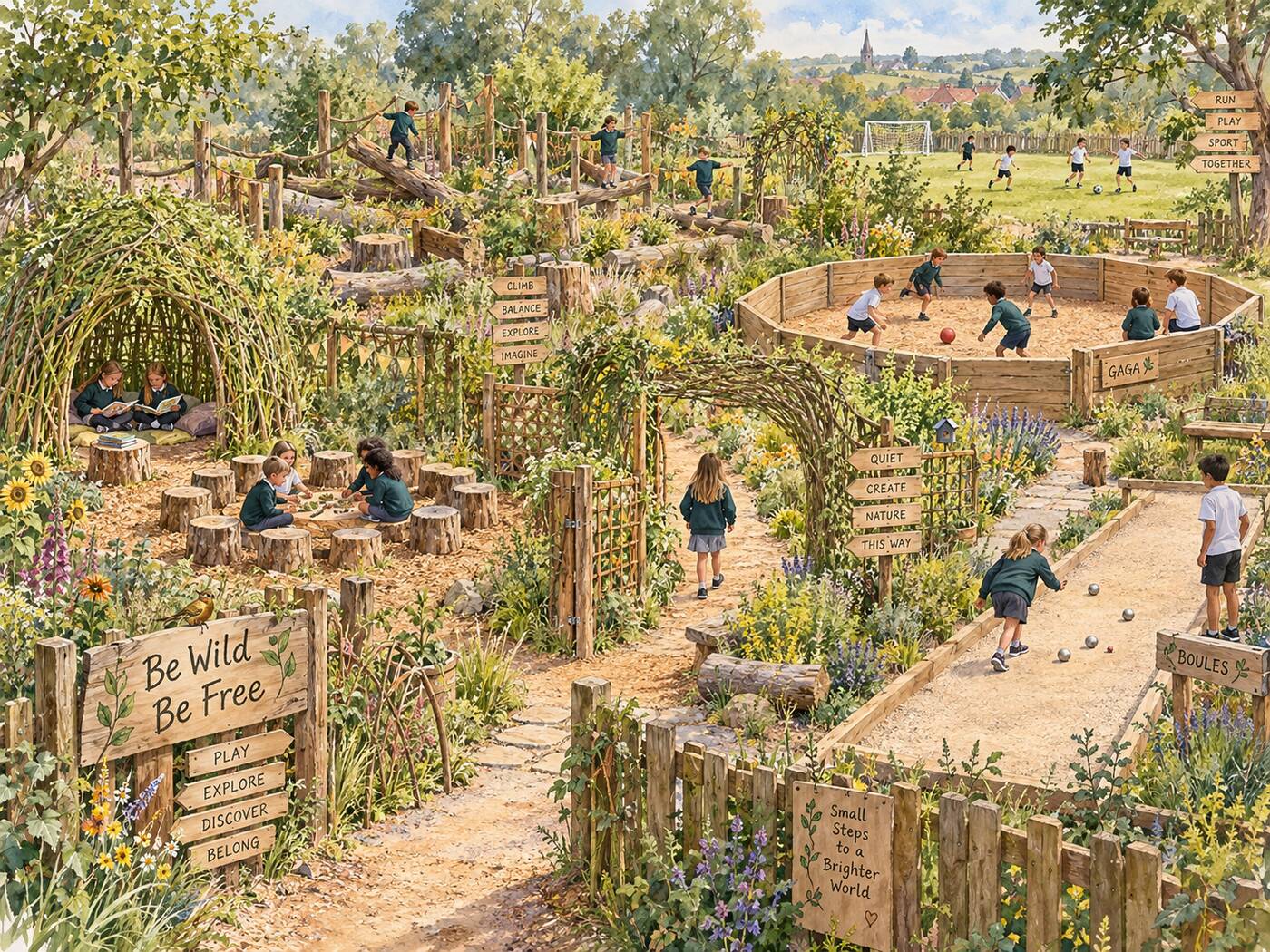
These are not six pieces of equipment that every school needs. They are ways a playground can work. One area may support several uses, resources can change through the year, and the final mix is shaped around your children, staffing, site and budget.
Small-scale games
Space for games that need less room and fewer players: boules, target games, throwing and catching, mini-courts, tabletop activities or changing playground challenges. Markings and moveable resources allow the offer to evolve rather than fixing the space to one game.
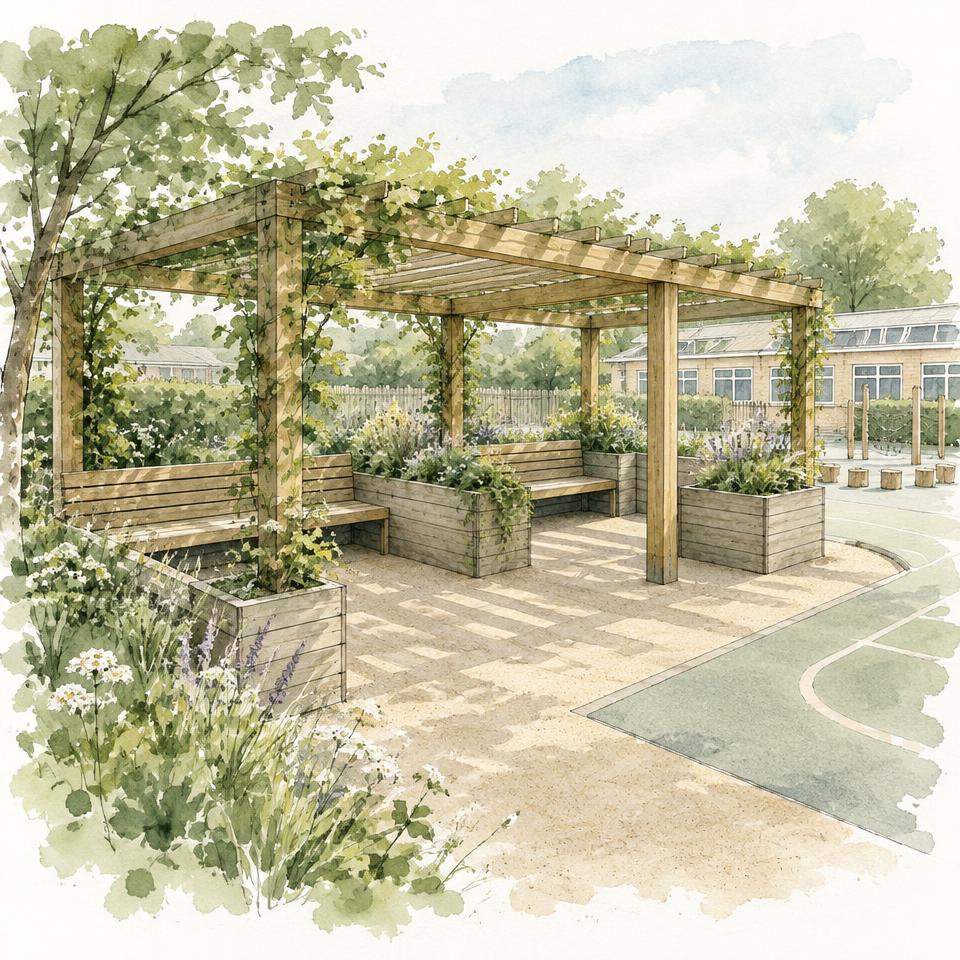
Read, Relax & Recoup
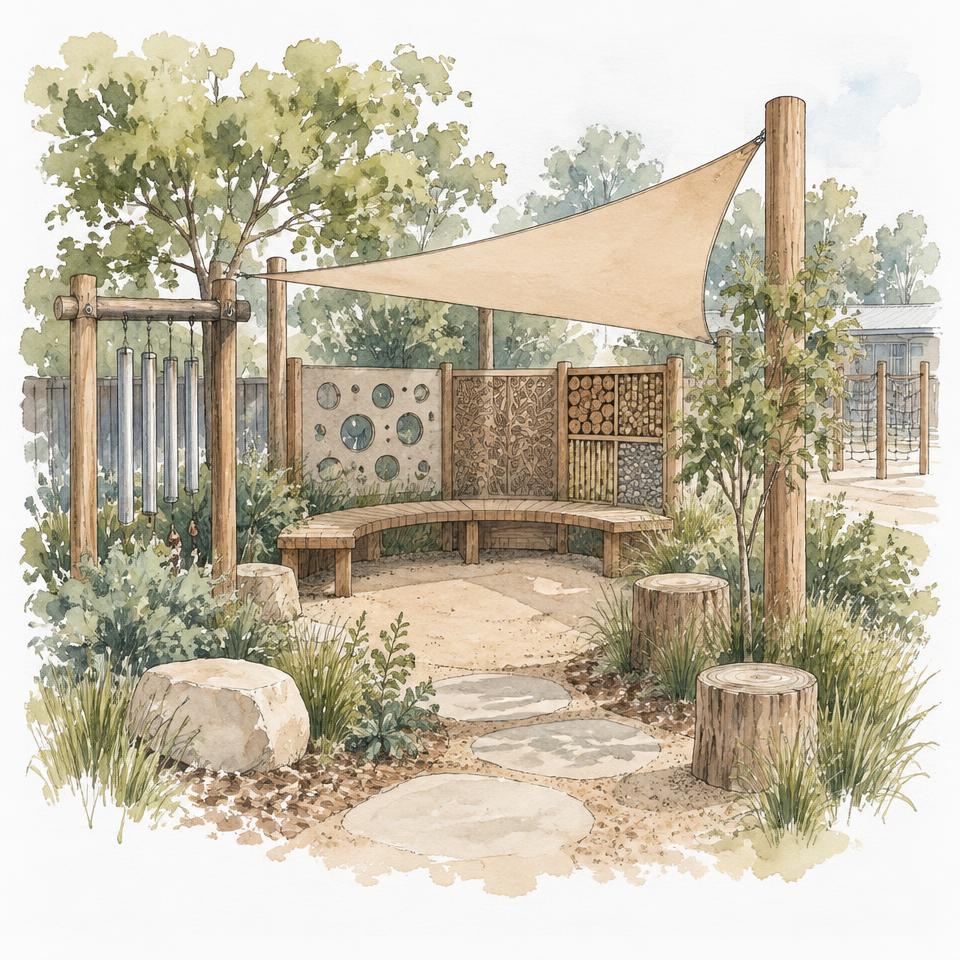
A lower-energy place to read, talk, sit quietly or take a few minutes away from busy play. Shade, seating, shelter or simple visual boundaries can create a calmer feel without turning the area into a high-maintenance garden.
ABC — Agility, Balance & Coordination
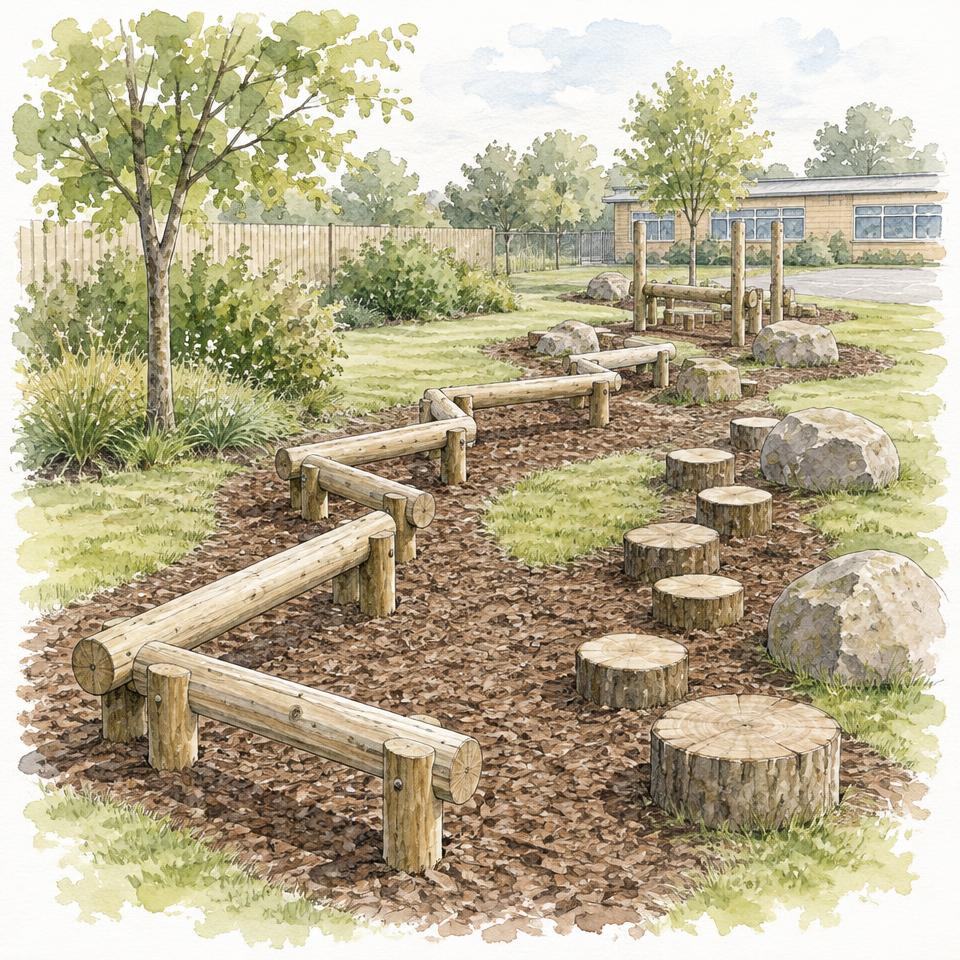
Opportunities to move in different ways: stepping, traversing, balancing, jumping, crawling, weaving and changing direction. These might use markings, low-level features, loose resources, logs, boulders or selected equipment depending on the site.
Large-format sport & active play
Keep proper space for football, running, basketball, netball and larger group games. The aim is not to remove sport, but to give high-energy activity a clear home so it can thrive without automatically occupying every part of the playground.
Collaboration space
A flexible place for small groups to make, build, solve problems, invent games, role-play or simply spend time together. Seating, tables, loose parts and open floor space can support many activities rather than prescribing a single use.
Create, Imagine & Change
Space deliberately left adaptable: chalk art, construction, den-making, performance, seasonal activities, pupil-led projects or whatever becomes important next. Not every square metre needs a permanent purpose; flexibility is part of the design.
Bespoke to your school
Designed with your staff, for your children
There is no off-the-shelf layout. Before proposing changes, we look at how your school actually uses the site: how children move through it, how adults supervise it, what the grounds team can maintain and which existing features are worth keeping.
Your duty rota: how many adults are on duty, where they stand, what they can see and which zones can be supervised sensibly.
Your numbers: how many children are out at once, which year groups share the space and how movement changes across the day.
Rotation or free-flow: whether particular areas are timetabled or open to all, based on your children and staffing rather than a generic model.
Maintenance capacity: what can realistically be checked, cleaned, repaired, pruned or replaced by your existing team.
Phased to your budget: quick wins first, then larger changes as funding allows — without needing to redesign the whole site at once.
Safe, practical and maintainable
Designed with the whole life of the space in mind
A successful design has to work after the launch day. We consider supervision, drainage, cleaning, wear, storage, vegetation, repairs and inspection from the start. Where play features are constructed or installed, we identify the relevant standards and guidance, and recommend proportionate checks, maintenance and independent inspection where appropriate.
Simple to manage
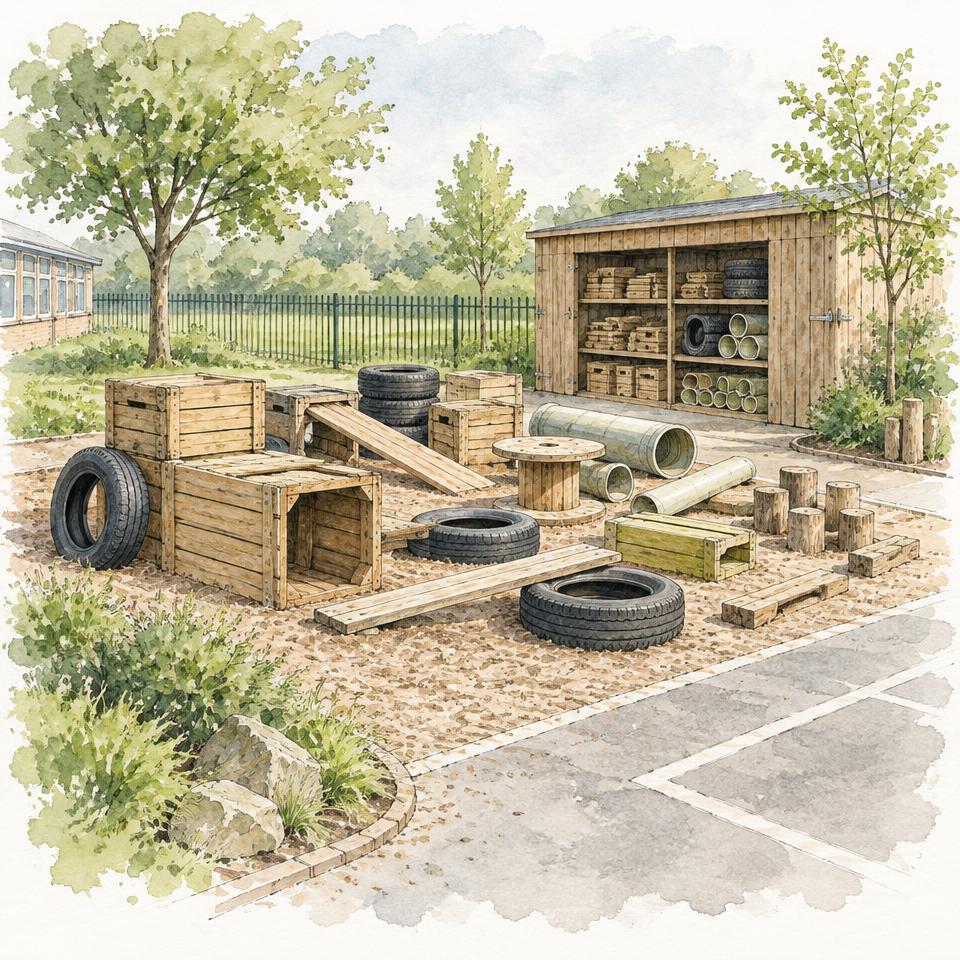
Loose & flexible play resources
Moveable or loose resources can add variety without major construction. They still need sensible checking, storage and supervision, but can often sit within normal school routines.
e.g. loose parts, moveable blocks, crates, simple game resources
Plan inspection & maintenance
Built from natural materials
Fixed or constructed natural features need to be considered as designed play features, with their risks, fixings, fall heights, surfacing and deterioration managed appropriately.
e.g. fixed balance logs, timber edging, constructed shelters or trellis structures
Plan inspection & maintenance
Manufactured & built equipment
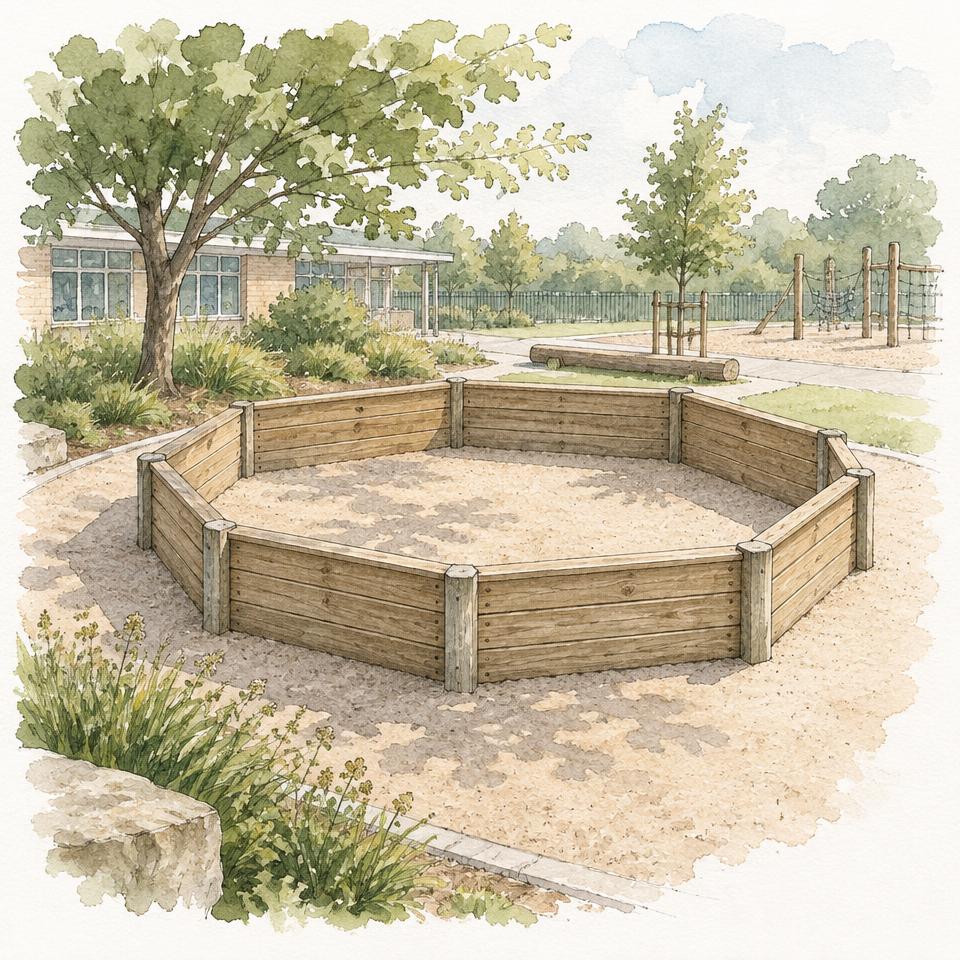
Manufactured or purpose-built equipment is used where it genuinely adds value, with access, surfacing, supervision and ongoing maintenance considered as part of the wider layout.
e.g. Gaga pit, climbing frame, traversing wall
For school business managers and governors: proposals separate capital costs from likely ongoing maintenance, inspection and replacement implications. The aim is to avoid creating a space that looks impressive on day one but is difficult or expensive for the school to sustain.
Outdoor learning space development
Grounds that teach
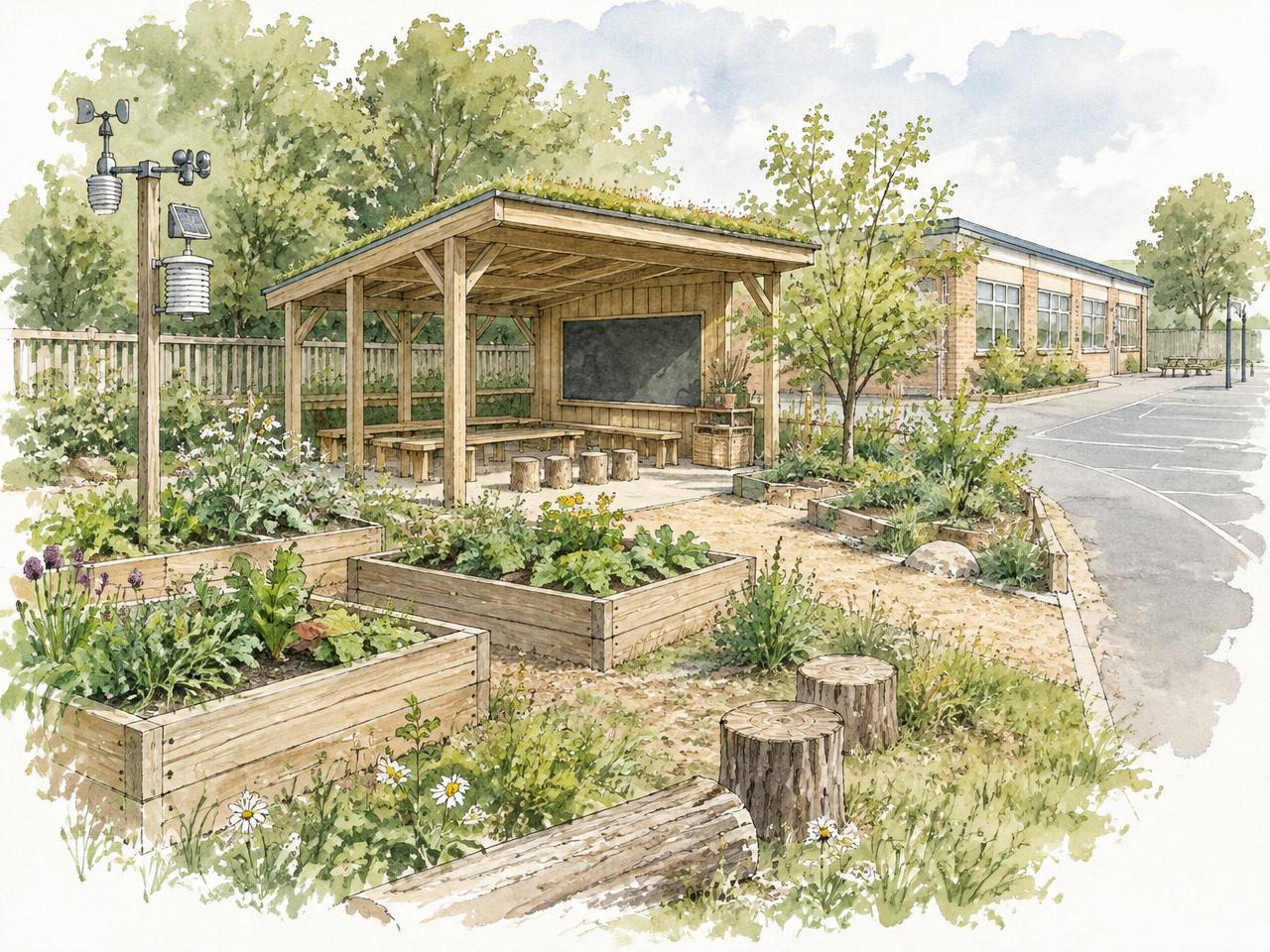
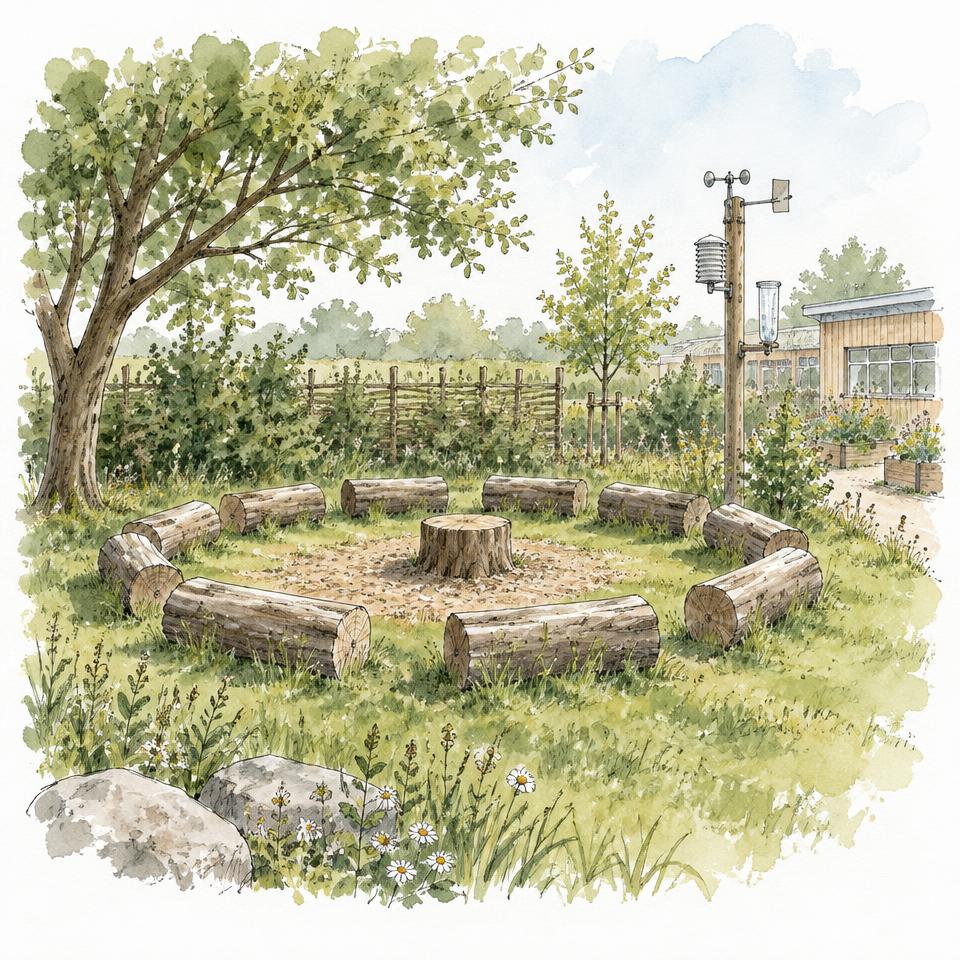
Outdoor learning does not require every corner of the site to become a garden. We identify the parts of your existing grounds that can support teaching, then add only the features that make them more useful, accessible and manageable throughout the school year.
Site audit & pupil voice — we walk the grounds, observe how spaces are used and listen to children and staff.
Curriculum opportunities — we identify realistic ways existing and proposed spaces can support subjects such as science, maths, literacy, art and PSHE.
Implementation planning — clear priorities for what the school can do itself and where specialist suppliers, installers or independent inspection may be appropriate.
We walk the grounds, ideally while they are in use, to understand movement, supervision, pinch points, underused areas and the features already worth keeping.
Staff & pupil input
We work with school leaders, teaching and support staff, premises teams and children to understand what different pupils need from playtime and what the school can realistically supervise and maintain.
Design proposal
An illustrated, flexible-use concept with priorities, suggested materials, indicative costs and the maintenance or inspection implications that should be considered before implementation.
Phased implementation
A staged plan that lets the school begin with high-impact, affordable changes and use appropriate contractors or suppliers for specialist work.
Launch & handover
Staff and pupils are introduced to how the new areas can be used, how resources are managed and the simple routines that will help the playground work well from the start.
Follow-up & care club
We return once the space has been lived in. Staff and children review what is working, learn practical care routines and can establish a pupil breaktime playground-care club to help look after resources, notice issues and build ownership of the space.
Inclusive playground development
Play for every child
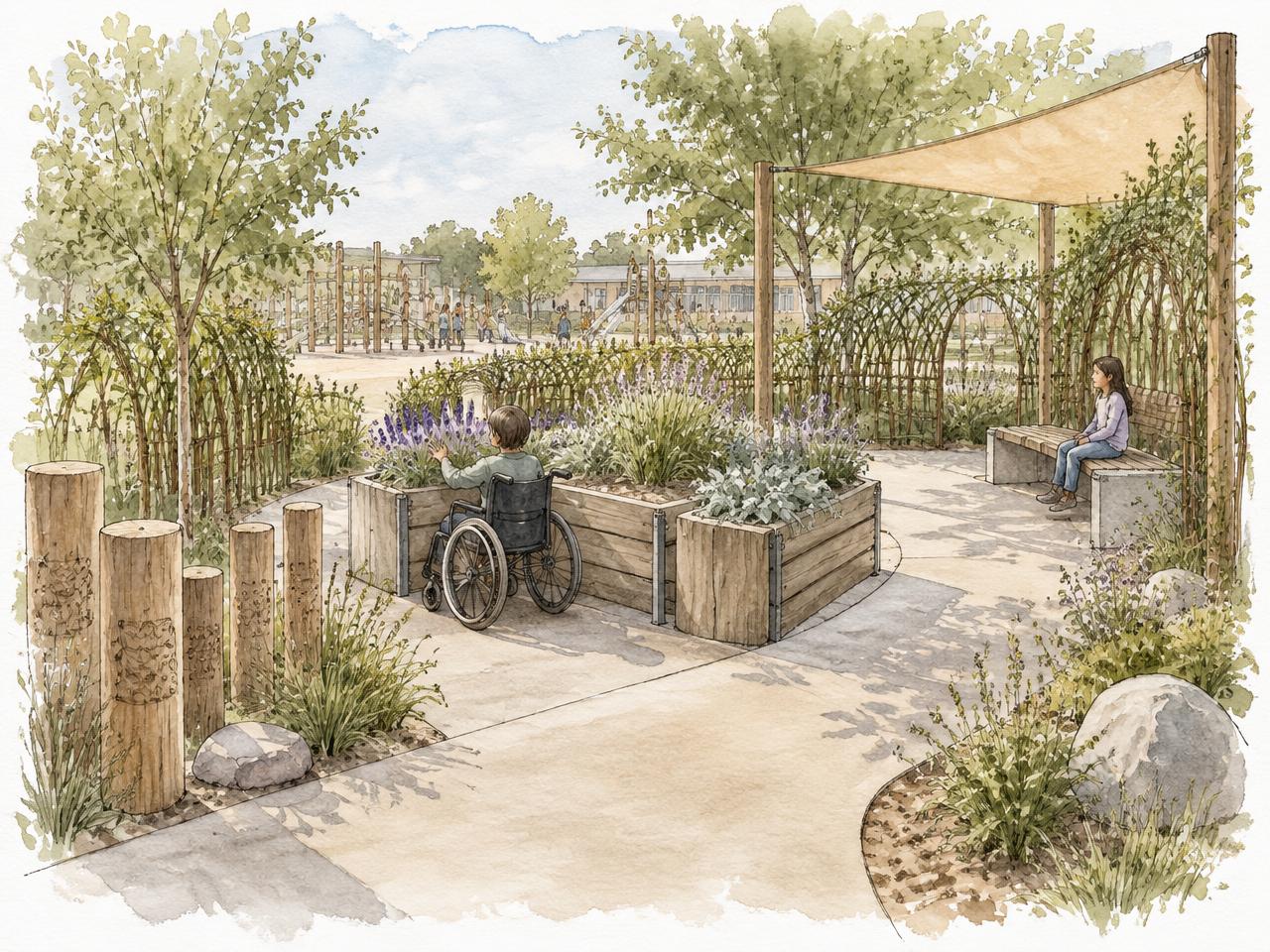
One open playground rarely works equally well for every child. We help schools create a better mix of active, social and quieter spaces, with access, sightlines, sensory load and supervision considered from the outset.
Inclusive play audit — access routes, surfaces, sightlines, seating, shade and noise, assessed through a SEND lens.
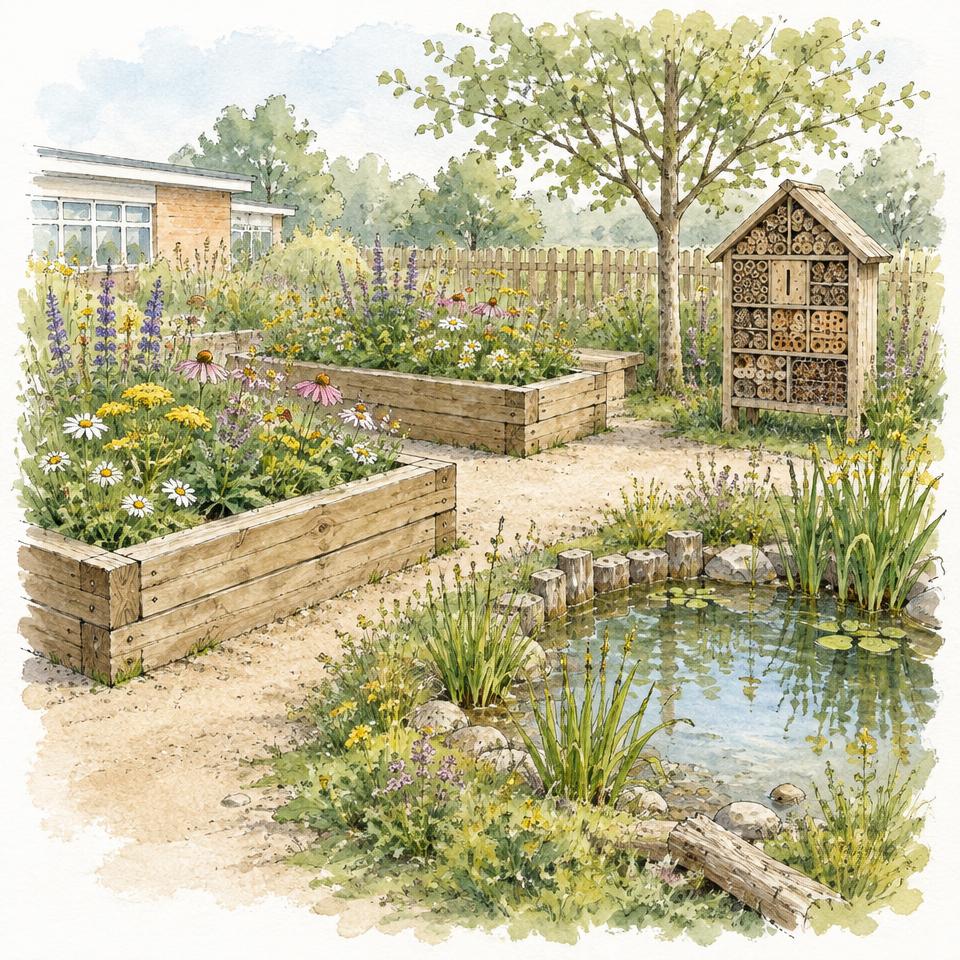
Sensory & calm zones — textures, sounds, scents and quiet nooks for children who need to regulate.
Open-ended play — carefully managed resources that support creativity, construction, problem-solving and different styles of play.
Playtime culture — training for lunchtime and support staff on facilitating inclusive play and managing risk.
Pupil co-design — children with additional needs shape the space from the start.
Teacher CPD
Confidence to teach outdoors
Beautiful grounds only matter if they're used. Our CPD is practical, delivered outdoors wherever possible, and built around the realities of a busy school week — real lessons, real weather, real children.
All phases
Outdoor Learning Foundations
The essentials for any member of staff starting out with learning outside the classroom.
Setting up and managing groups outdoors
Behaviour, boundaries and routines
Simple, low-prep activities for any subject
Aim: Give staff the confidence to take a class outside and bring it back in, calm and focused.
INSET day · half day
PrimarySecondary
The Curriculum Outdoors
Taking maths, science, English and geography outside — with clear objectives and assessment.
Subject-specific lesson models
Using your own grounds as a resource
Evidencing progress outdoors
Aim: Show that subject teaching outdoors can be rigorous, with clear objectives and evidence of progress.
INSET day
EYFSKS1
Loose Parts & Natural Play
Open-ended play that builds language, creativity, problem solving and collaboration.
Sourcing, storing and rotating loose parts
Adult role: observe, enable, extend
Mud kitchens, dens and natural crafts
Aim: Set up open-ended play that staff can sustain and that builds language and problem solving.
Half day · hands-on outdoors
SENDAll phases
Inclusive Outdoor Practice
Adapting outdoor learning and play so every child can take part fully and safely.
Sensory needs and regulation outdoors
Adapting activities, tools and terrain
Working with TAs and 1:1 support
Aim: Make sure every child can take part fully and safely in outdoor learning and play.
INSET day · half day
All staffLeaders
Risk–Benefit & Safe Practice
Moving from “risk-averse” to “risk-aware” — managing hazards while keeping the benefits of challenge.
Writing practical risk–benefit assessments
Tool use and fire safety basics
Communicating with parents and governors
Aim: Move from risk-averse to risk-aware, with assessments that stand up to scrutiny.
Half day · weekend
LeadersSubject leads
Leading Outdoor Learning Whole-School
For heads, deputies and outdoor learning leads embedding a sustainable whole-school approach.
Vision, policy and progression
Timetabling and staff development
Monitoring impact and reporting to governors
Aim: Embed outdoor learning in how the school runs, so it never relies on one enthusiast.
Half day · termly
KS3–KS4
Outdoor Learning for Wellbeing & Teamwork
Using outdoor challenge to build resilience, communication and leadership in older pupils.
Team challenges with clear debriefs
Supporting transition and re-engagement
Links to PSHE and personal development
Aim: Give staff a ready-to-run set of team challenges and debriefs for transition, re-engagement and personal development.
INSET day · weekend
All phasesAfter a grounds project
Making the Most of Your New Space
A practical follow-up with staff and pupils once the new playground has been in use, helping the school embed good routines, adapt what is not working and develop pupil ownership.
Using flexible areas in different ways rather than assigning one activity permanently
Simple care, storage, checking and reset routines for staff and children
Setting up a pupil breaktime playground-care club to help maintain resources and champion the space
Aim: Keep the new space well used, well cared for and owned by pupils long after the build.
Half day · on site with staff & pupils
Support staffMidday teams
Playtime & Lunchtime Teams
Equipping midday supervisors and support staff to enable rich, inclusive play.
Facilitating play without taking over
Loose parts at lunchtime
Including every child and calming conflict
Aim: Give lunchtime staff the confidence to support rich, inclusive play without taking it over.
Half day
INSET days & half days
Whole-staff training on your site, using your own grounds.
Weekend courses
Full or half-day courses on a Saturday, on site or at a local green space.
In-class coaching
Team-teaching and modelled lessons with your classes.
Year-long programmes
Training, coaching and review to embed lasting change.
40+
years of combined experience
School leadership, outdoor education and practical experience
Our experience spans classroom teaching, outdoor education and senior school leadership. That includes responsibility for both academic and operational areas of school life, giving us a practical understanding of how ideas need to work for pupils, staff, leaders, premises teams and governors — not just how they look on a plan.
School leadership — experience across academic development, operations, budgets, health and safety, premises and whole-school improvement.
Inspection and compliance — experience of school environments reviewed through Ofsted, ISI, HSE and MIST processes, with an understanding of the evidence, systems and day-to-day practice schools need to maintain.
Governance — school governorship experience brings an additional perspective on accountability, strategic oversight, affordability and long-term sustainability.
Outdoor education — practical experience in Forest School, outdoor learning and adventurous activity helps us create spaces that encourage challenge, movement, independence and purposeful play.
Questions
Working with us
We have a small budget — is it still worth talking to you?
Yes. Some of the most useful changes are about zoning, markings, seating, routines and better use of what is already there. We can help you prioritise quick wins and create a phased plan for larger improvements as funding becomes available.
Can you help with funding bids?
We can provide the design rationale, priorities and indicative cost information that can support grant applications, governor decisions or PTA fundraising.
Do you only work with primary schools?
Our playground consultancy is primarily designed for primary schools, where breaktime use, supervision and competing demands on limited space are central to the brief. Our outdoor-learning and staff-development work can also be adapted for other phases and settings.
Where do you work?
We deliver training and consultancy on site at your school. Get in touch to discuss your location and we'll let you know how we can help.
Get in touch
Start with a conversation
Tell us a little about your school and what you'd like to achieve. We'll arrange a free, no-obligation chat to explore how we can help.